The short answer: Microblading uses a handheld blade of tiny needles to cut fine hair-like strokes into the skin. Nano brows create similar strokes with a machine and an ultra-fine needle, while ombré brows use machine shading for a soft, makeup-like gradient. The right choice depends on your brows, skin and preferred finish.
Your brow style at a glance
- Nano brows: barely-there strokes that look like your own brow hair.
- Combination brows: hair strokes at the front, with soft density through the body and tail.
- Powder brows: an even, softly filled-in look, like a light brush of brow powder.
- Ombré brows: light at the front, building to the most definition at the tail.
- Microblading: hand-drawn strokes made with a blade tool. Fayve doesn’t offer this one.
Three things worth knowing before you choose
- The tool matters. A hand blade and a machine place pigment differently, which changes how your strokes heal and fade.
- Your skin and any old brow work can change what suits you, so your brows should be assessed before a technique is picked.
- Fresh brows always look stronger. The healed result is the one to judge.
Why This Choice Matters
If you’ve been saving brow photos and searching microblading vs nano brows late at night, you’re not alone. Every studio seems to use a different name for the same thing. And most before-and-after photos never show you how the brows looked a few months later.
That confusion matters, because the technique you choose shapes how your brows look up close, how they heal and how well they suit your skin. So let’s untangle it together. We’ll walk you through what microblading actually is, how machine nano strokes and shaded brows differ, and which brow types each one tends to suit. You’ll also find what to ask before you book and what to expect while your brows heal.
By the end, you should feel ready to walk into a consultation knowing what you want, and what you don’t.
What Is Microblading, and How Is It Different From Nano Brows?
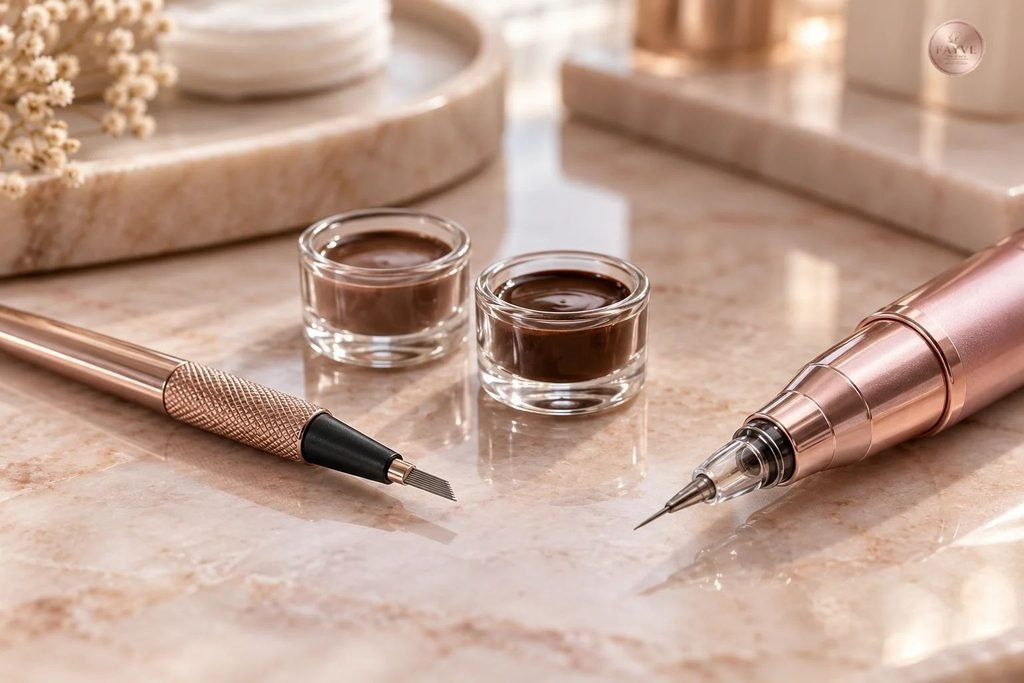
The simplest way to tell these techniques apart is to look at the tool. Microblading is done by hand, nano brows are made with a machine, and powder and ombré brows are machine shading rather than strokes.
What is microblading?
Microblading is a manual way of drawing eyebrow “hairs” into the skin. Your artist holds a small pen-like tool tipped with several tiny needles and uses it to make fine, hair-like cuts, which are then filled with pigment. It can sound gentle, but microblading is a type of cosmetic tattoo, so it deserves the same care you would give any tattoo decision.
Because the pigment sits in the upper layer of the skin’s dermis, microblading tends to fade sooner than brows made with a machine. Dermatologists writing in The Hospitalist explain that a little bleeding during microblading can push some pigment back out, while machines place pigment faster and lose less of it.
What are nano brows?
Nano brows aim for the same hair-like effect, but the strokes are created with a permanent makeup (PMU) machine and a very fine needle instead of a hand blade. At Fayve, Nano Brows are built from fine, machine-created strokes that follow the direction your own brow hair grows, so they’re designed to look natural even up close.
You may also see nano brows called “nanoblading” online, which only adds to the confusion. The names describe the tool, not a better or worse result.
Microblading vs microshading: where powder and ombré brows fit
Microshading usually means building colour from tiny dots of pigment rather than strokes, for a soft, filled-in look. Many studios use it as another name for powder brows. Ombré brows take that same shading and grade it, so the front stays light and airy while the tail is the most defined.
A quick note on what we offer: Fayve works with machine nano strokes, shading techniques and combinations of the two. We don’t offer blade microblading, but we’re happy to explain how it compares so you can make an informed choice.
Microblading vs Nano vs Combination vs Powder vs Ombre Brows: Side by Side
Each technique creates a different look, so it helps to see them next to each other. This table builds on the technique comparison on our homepage, with a microblading column added only where it can be described fairly.
| Microblading | Nano brows | Combination brows | Powder brows | Ombré brows | |
| How it’s done | By hand, with a blade of tiny needles | Machine, fine strokes | Machine strokes plus soft shading | Machine, diffused shading throughout | Machine, shading that builds in intensity |
| Main effect | Hair-like strokes | Individual hair-like strokes | Strokes plus soft shading | Soft, diffused shading | Graduated shading |
| Front of the brow | Hair strokes | Hair strokes | Hair strokes | Soft and diffused | Very soft and airy |
| Body of the brow | Hair strokes | Hair strokes | Strokes plus shading | Shaded | More defined shading |
| Tail | Varies by artist | Soft, natural | Defined | Defined | Most defined |
| Overall look | Hair-like | Barely-there, hair-like | Natural and dimensional | Softly made-up | Polished and graduated |
| Definition | Varies by artist | Softest | Medium | Defined | Defined with a gradient |
| Available at Fayve | No | Yes | Yes | Yes | Yes |
None of these is better than the others. They simply create different looks, and the right one depends on your natural brows, your skin and how you like to wear your makeup.
Which Brow Technique Suits Your Brows?
The best starting point isn’t the technique. It’s you: your natural brows, your skin and the look you reach for every morning.
If you want brows that look like your own hair
Nano Brows may suit you if your brows are sparse, over-plucked, thinning or have small gaps. They’re also lovely if you like a minimal-makeup look and want individual, hair-like strokes rather than a filled-in finish.
If you want natural-looking fronts with more fullness
Combination brows pair fine strokes at the front with soft shading through the body and tail. They may suit you if you want more density, a more defined arch or a polished tail, without losing that soft, natural start. You can browse real Combination Brows before and after photos to see how the two effects blend.
If you fill in your brows every morning
Powder and ombré brows are often a closer match if you already use a brow pencil or powder most days. They give you visible structure and definition, which can be especially helpful if your brows are sparse. Powder brows look evenly softened, while ombré brows fade from a light front to a stronger tail.
Nano brows vs powder brows: a quick way to decide
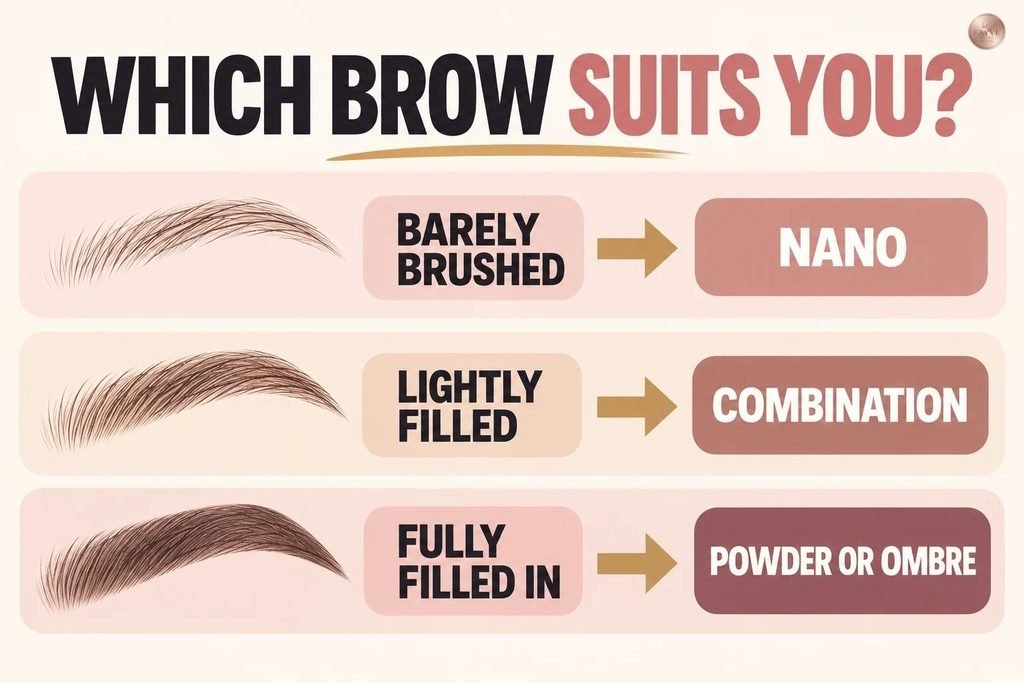
Choose nano brows if you want fine, hair-like strokes that blend with your own brow hair. Choose powder brows if you prefer a soft, filled-in look, like a light brush of brow makeup. If you want a bit of both, combination brows give you strokes at the front and shading through the rest.
Still unsure? Ask yourself these four questions:
- How do you wear your brows today? Barely brushed points towards nano. Lightly filled suggests a combination. Fully filled in leans towards powder or ombré.
- How much natural brow hair do you have? Some hair to work with suit strokes. Very sparse areas may need shading to add density.
- How does your skin behave by midday? If it gets noticeably oily, mention it at your consultation.
- Do you have old brow work? If yes, it needs to be assessed before any new technique is chosen.
And if your artist suggests a different technique after seeing your skin and brows, that’s a good sign. It means the plan is being built around you, not a menu.
Does Your Skin Type Change the Answer?
Yes, it can. Your skin plays a big part in how pigment settles and how crisp your brows stay once healed.
Oily skin and larger pores
If your skin is oily, you’ll often hear that microblading isn’t the best fit. Dermatologist Dr Joshua Zeichner told InStyle that oil can interfere with pigment retention and healing, which is why shaded or machine techniques are often suggested instead.
That said, there’s no automatic yes or no. Oiliness, pore size and skin texture vary a lot from person to person, so your skin should be assessed individually before a technique is chosen. If your skin tends to get shiny through humid Mumbai days, just mention it at your consultation. It’s useful information for planning your brows.
What if you already have old microblading?
If you’ve had microblading before, this part is for you. Old microblading can heal grey, blue-grey, ashy or reddish over time. Simply placing a new brown over it may not give you a clean result, because the old tone can keep showing through.
At Fayve, existing brow work is assessed first. If it’s suitable for correction, the brow colour correction process follows a simple order: assess, neutralise the unwanted tone, let it heal, reassess, and only then introduce your new colour. If the old pigment is very dark or sits well outside your ideal shape, lightening or removal may be a better first step.
When to pause and check with a doctor first
Permanent brows aren’t right for everyone, or at least not right now. It’s wise to hold off, or speak to your doctor first, if any of these apply:
- You’re pregnant or breastfeeding. Fayve recommends postponing PMU until afterwards.
- You have a history of keloid scarring.
- You have broken skin, pimples, a sunburn or a skin condition on or around your brows.
- You take blood thinners, have a weakened immune system or have recently used isotretinoin.
- You have known allergies, or you’re on medication you’re unsure about.
Your artist can talk you through timing, but only your doctor can confirm whether it’s safe for you.
Is Permanent Makeup Safe? What to Check Before You Book
Most people heal well, but permanent brows are still a skin procedure, so it’s worth knowing the risks honestly. The good news is that most of them come down to choosing a careful, hygienic studio and following your aftercare.
Here’s what the evidence says:
- Infection can happen if equipment isn’t sterile. The US Food and Drug Administration also notes that contaminated inks have caused infections, even when artists followed hygienic procedures.
- Allergic reactions to pigments are possible, but the FDA describes reports of them as rare.
- Granulomas and keloids are uncommon, but WebMD lists both as risks. Keloids are more likely if you’ve had them before.
- Removal is hard. Permanent makeup can be very difficult to remove, which is why the design stage matters so much.
- MRI scans: rarely, tattooed skin can swell or burn during an MRI. Don’t skip a scan you need; just tell the radiologist about your brows.
At Fayve, every treatment uses single-use sterile needles, hospital-grade sterilisation and imported, skin-safe pigments. You can read more about our hygiene and pigment standards on the homepage.
Questions to ask at your consultation
Wherever you book, these questions help you feel confident before anything begins:
- Which technique do you recommend for my skin and brows, and why?
- Can I see healed results for that technique, not just fresh ones?
- Will you show me the mapped shape before you start, and can I adjust it?
- Are the needles single-use and opened in front of me?
- Which pigments do you use?
- Will I need a perfect appointment, and when?
- What should I avoid before and after my appointment?
A good artist will be happy to answer every one of these.
What Happens at Your Fayve Brow Consultation?
Nothing touches your skin until you’ve seen and agreed to the shape. Here’s how a brow appointment at our Lokhandwala studio in Andheri West usually flows:
- A conversation first. We talk about the look you love, and just as importantly, the look you don’t want.
- A close look at your features. Your artist considers your existing brow hair, facial proportions, skin type, skin tone and undertone, and any previous brow work.
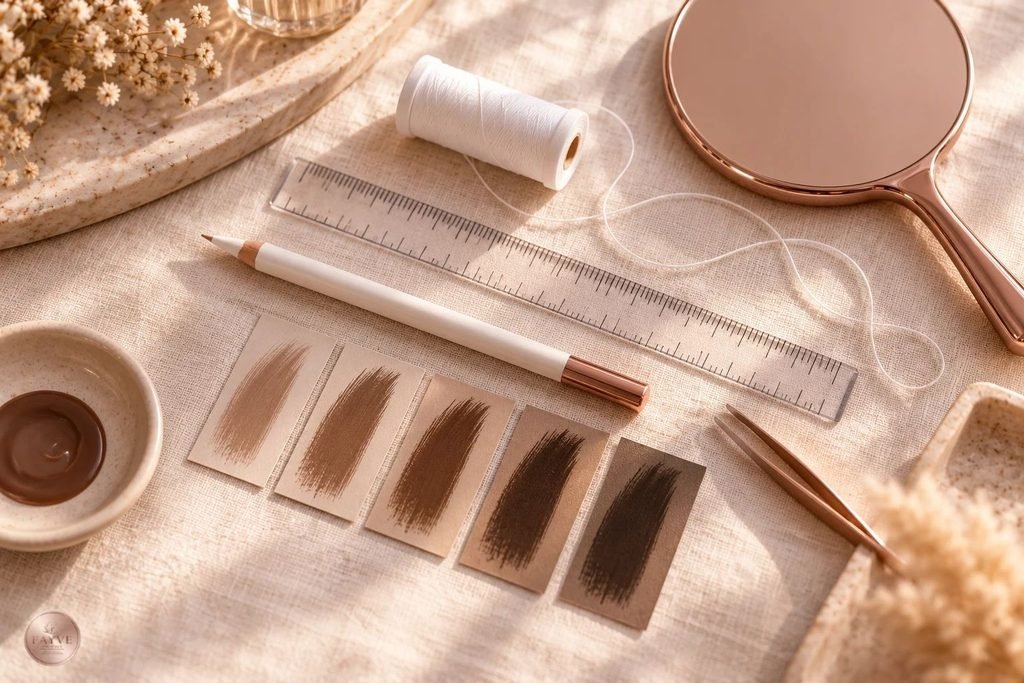
- Mapping your brows. Your brows are measured and drawn on. You see the proposed shape and can ask for changes before anything begins.
- Choosing the technique and pigment. Both are picked with your healed result in mind, not just how the brows will look on the day.
- Numbing. Once the shape is agreed, a topical numbing cream goes on for about 15–20 minutes.
- Building the brows. Colour and definition are built gradually, usually over 3–4 controlled passes.
- Healing and review. Your brows then need time to heal and settle. Once healed, a perfection or touch-up appointment may be suggested if it’s needed.
Worried about discomfort? Most people find it mild and manageable with numbing, though everyone’s sensitivity is a little different. You can read the full step-by-step for each treatment in our detailed procedures.
Every brow is designed by our internationally certified artist, trained through Scalpa California, around your features rather than a standard template.
Fresh vs Healed: What Your Brows Will Look Like
Please don’t judge your brows on day one. Fresh brows almost always look darker and stronger than the final result, and that’s completely normal.
As your skin heals, the colour softens and settles. Along the way, your brows may flake or look a little patchy, and the colour can even seem to disappear for a while. WebMD notes that brows getting a little dark and flaky is a normal part of healing, and that picking at them can cause scarring.
| Stage | What you may notice | What helps |
| Fresh | Colour looks stronger and darker than planned. You may have some redness, tenderness or mild swelling. | Don’t judge the result yet. Follow your aftercare instructions. |
| Healing | Flaking or light scabbing. Colour may look patchy or uneven for a while. | Don’t pick or scratch. Let flakes come away on their own. |
| Healed | Colour has softened and settled. This is the result to assess. | Review your brows with your artist. A perfection appointment may be suggested. |
How long each stage takes varies with your skin and the technique, so your artist will guide you on what to expect for your brows.
That’s why we believe you should see the whole journey: before, fresh and healed. You can see it for yourself in our before and after gallery, where every photo is shown unretouched, or browse more results on Instagram at @fayvestudio.
Finding the Brow That Feels Like You
There’s no single best brow technique, only the one that suits your natural brows, your skin and the way you like to look every morning. Microblading, nano brows and shaded brows can all look beautiful. The difference lies in how they’re created and how they heal on you.
Not sure which one fits? You don’t have to work it out alone. WhatsApp us a clear photo of your brows, along with your name, any previous brow work and the look you’d love. We’ll review it and suggest a personalised plan and quote. If a photo isn’t enough, we’ll invite you to book a consultation at our studio in Lokhandwala, Andheri West.
Frequently Asked Questions
1. Is nano brows the same as microblading?
No. Both aim for hair-like strokes, but microblading is done by hand with a blade of tiny needles that cuts strokes into the skin. Nano brows are created with a PMU machine and a very fine needle. The tool changes how pigment is placed, how your strokes heal and which skin types each tends to suit.
2. Which lasts longer, microblading or nano brows?
Machine-made brows generally fade more slowly than microblading, because microblading tends to lose more pigment during the procedure. There’s no fixed timeline, though. Your skin type, sun exposure, skincare routine, aftercare and how your skin holds pigment all shape how long any brow lasts, and colour refreshes over time are normal.
3. Which brow technique is best for oily skin?
Microblading is often considered a less reliable choice for very oily skin, because oil can interfere with how pigment settles. Machine nano strokes, combination brows or powder brows are often suggested instead. Still, oiliness and skin texture vary a lot, so your skin should always be assessed before a technique is chosen.
4. Can I switch from microblading to another technique later?
Usually, yes, but your existing brows need a proper assessment first. Old microblading can heal grey, ashy or reddish, and new pigment placed straight over it may not heal cleanly. Depending on what’s there, your next step could be a new treatment, colour neutralisation, or lightening before a fresh brow is designed.
5. Which brow technique looks most natural?
It depends on what nature means to you. Nano brows give the softest, most hair-like finish. Combination brows add gentle density, while powder and ombré brows look like softly filled-in brows. The most natural result is the one designed around your own brow hair, face shape, skin tone and everyday makeup. You’ll find more answers in our brow FAQs.